

For a British garden, IP67 is the minimum for waterproof LED strip lights. If the lighting is being recessed into the ground, into decking or anywhere water can collect and sit, use IP68 neon flex instead. IP65 belongs outdoors only where it is genuinely sheltered — under a covered porch or inside a soffit — because it is not built to take direct British weather.
That is the short version, and for most jobs it is the whole answer. What follows is why the numbers work that way, and where people get caught out.
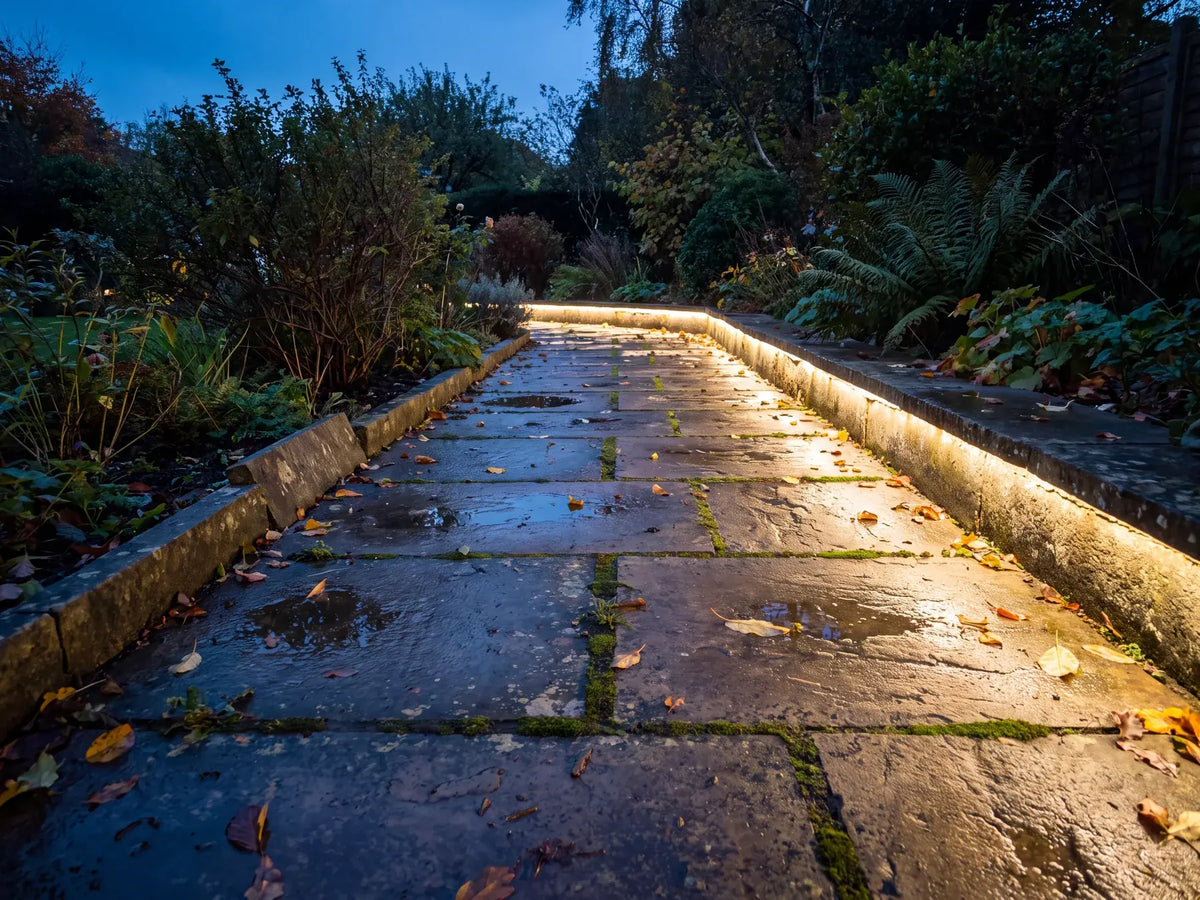
An IP rating has two numbers and they measure different things. The first is dust. The second — the one that matters in a garden — is water.
IP65 is tested against low-pressure water jets from any direction. That makes it splash resistant — fine under cover, but not built for driving rain or standing water.
IP67 is tested by immersion in a metre of water for thirty minutes. It handles rain, frost and wind-driven wet, which is why it is the garden default.
IP68 goes further again: continuous immersion beyond a metre. It survives sitting in water, which is what recessed, in-ground and submerged runs demand.
Notice that the jump from IP65 to IP67 is not one step up the same scale. It is a change in kind: from “water hitting it” to “water covering it”.
IP65: sheltered outdoor only
IP65 is splash resistant. That is a real rating and a useful one — it is simply not a weatherproof one, whatever the reel is labelled.
A British winter puts lighting through rain arriving sideways, standing water after a downpour, and repeated freeze and thaw that works moisture into any gap. IP65 is not tested against any of that. Put it on an exposed fence and you are relying on luck.
Where IP65 does work outdoors:
- Under a covered porch or a solid canopy
- Sheltered patio areas with a roof over them
- Inside a soffit or a sheltered overhang
- In a garden room or summerhouse that stays dry
- Carports and covered walkways
If you can stand where the light will go and stay dry in the rain, IP65 is fine. If you cannot, it is not.
IP67: the garden default
IP67 is tested to survive immersion in a metre of water for half an hour. Nothing in a normal garden will ever put it through that, which is exactly the point — the margin is what carries it through years of British weather.
Use IP67 waterproof LED strip lights for fences, walls, pergolas, step nosings, planter edges, garden paths and any run that sits out in the open. The same rating covers decking strip lights that sit on the surface rather than recessed into it.
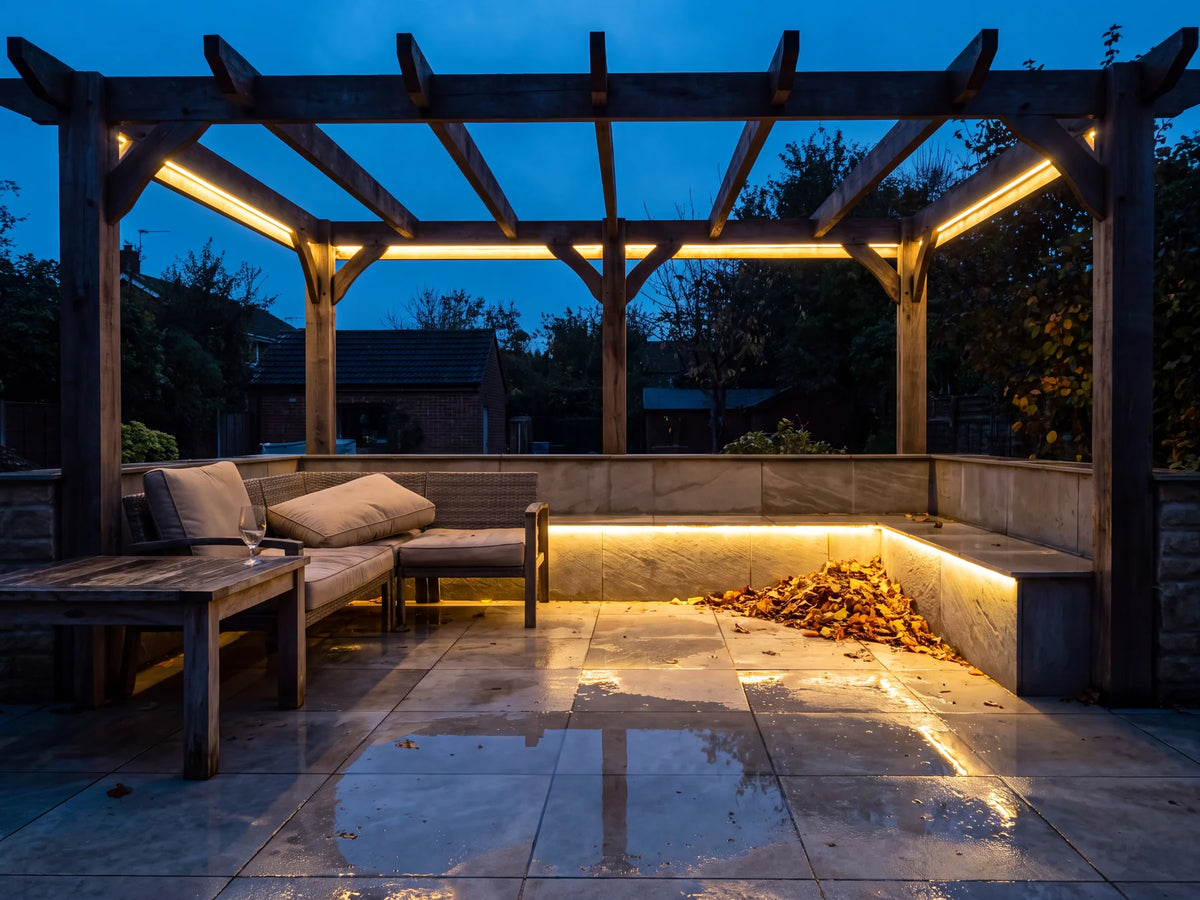
 Warm White 3000K COB LED Strip 24V 480LEDs/m IP67£14.55 per metre
 Warm White 2700K COB LED Strip 24V 480LEDs/m IP67£14.75 per metre
 Natural White 4000K COB LED Strip 24V 480LEDs/m IP67£14.55 per metre
Warmer colour temperatures suit planting and stone. 2700K reads soft and slightly amber against sandstone; 3000K is the safer all-rounder; 4000K is cooler and works better against grey porcelain and rendered walls than it does against timber.
IP68: recessed, in-ground and submerged
The moment lighting sits in a recess, IP67 stops being enough. A channel cut into decking or paving is a place where water arrives and then stays — and IP67 is rated for temporary immersion, not permanent.
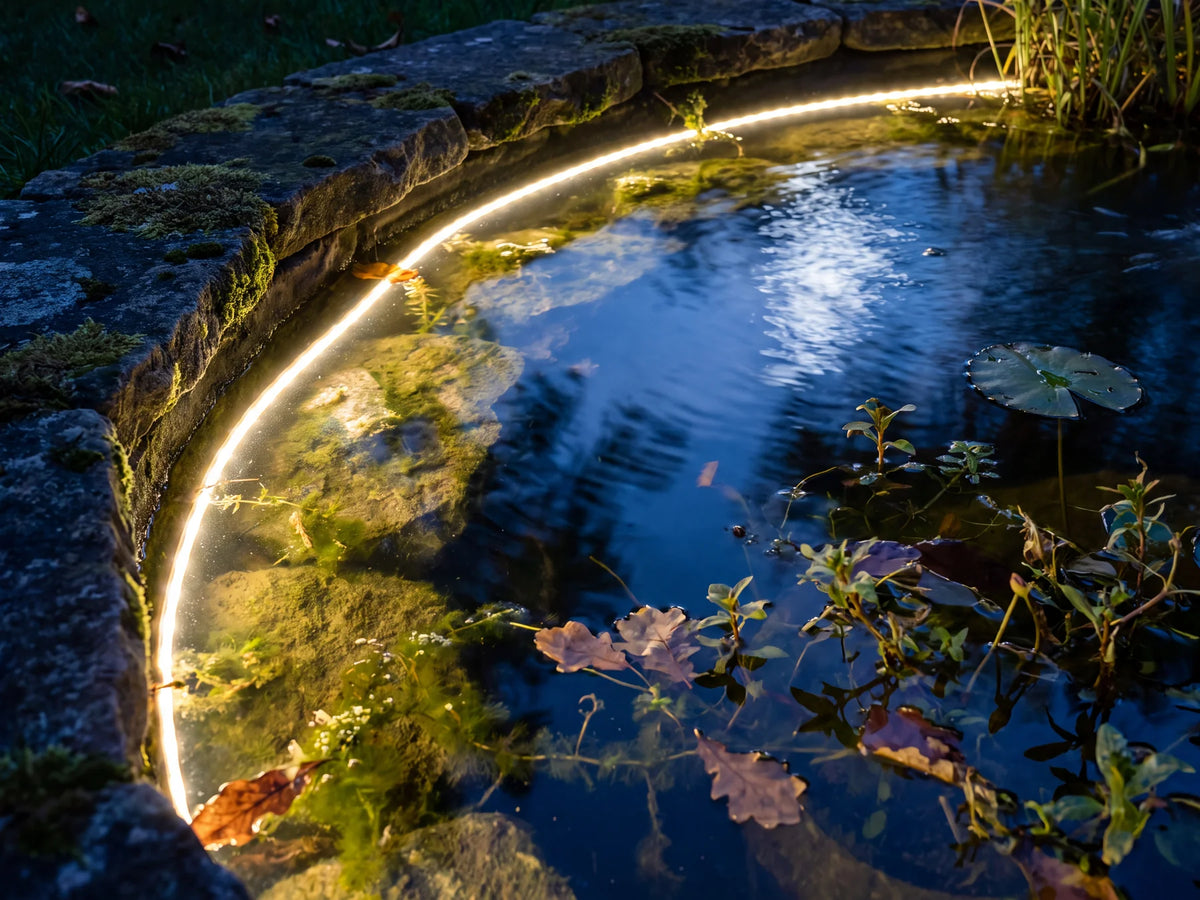
Use IP68 neon flex for anything recessed into the ground, set into decking, run along a threshold that ponds, or placed in or beside a pond or water feature. This is the only rating to specify where lighting is genuinely submersible.
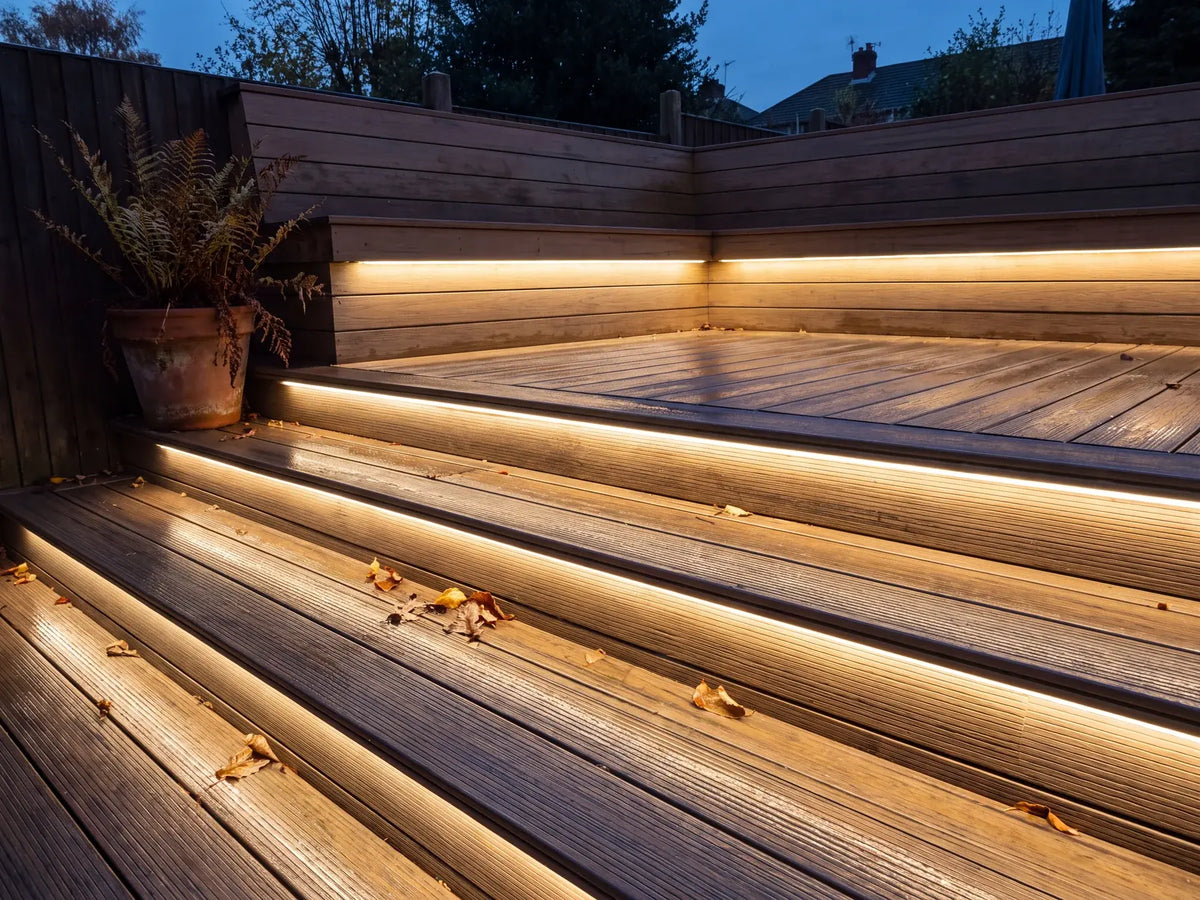
 Warm White Neon Flex 2800K 24V 10x20mm IP68£25.75 per metre
 Natural White Neon Flex 4000K 24V 10x20mm IP68£25.75 per metre
 Cool White Neon Flex 6000K 24V 10x20mm IP68£25.75 per metre
Neon flex is the better choice here for a second reason beyond the rating. It is a sealed extruded body rather than a tape inside a channel, so there is no cover joint for water to find, and it takes the knocks that come with being set into a surface people walk on.
Does 12V or 24V matter outdoors?
The IP rating decides whether the lighting survives. The voltage decides whether it looks right along the whole run.
12 volt LED strip lights are perfectly sound outdoors provided the run is short — a single planter, a doorway, a couple of steps. Over longer distances 12V loses voltage along the strip, and the far end sits visibly dimmer than the end nearest the driver. Garden runs tend to be long, which is why our outdoor waterproof LED strip lights are 24V: the same drop is spread across twice the voltage, so a 15 or 20 metre border holds an even brightness end to end.
If you already have 12 volt gear and the run is under about five metres, it will be fine. The same applies to RGB and single-colour waterproof LED strips alike. Beyond that, 24V is the safer specification.
The mistake that costs people a rebuild
This catches people out constantly. A profile looks solid and protective, so it gets treated as though it seals. It does not. Pair the right profile with the right IP rating and both do their job:
 1 Metre In-Ground Floor Profile 30x20mm, Opal Cover£17.75 each
 2 Metre In-Ground Floor Profile 30x20mm, Opal Cover£27.85 each
Where each rating goes
- Covered porch, soffit or carport — IP65 is enough.
- Fences, walls, pergolas and planter edges — IP67.
- Step nosings and garden paths — IP67. Outdoor strip lights for steps take a lot of splash from above.
- Patio edges and garden borders — IP67 garden strip lights.
- Recessed into decking or paving — IP68.
- Thresholds where water pools — IP68.
- Ponds and water features — IP68.
Three things to check before you order
- Where the driver goes. The strip may be IP67, but the driver needs its own rating and its own dry or sealed position. It is the part most likely to need attention later, so keep it accessible.
- The joints. A run is only as sealed as its weakest connection. Every cut end and every join needs sealing properly, or the rating on the reel means nothing once it is installed.
- The length. Longer outdoor runs need the voltage and driver sized for the distance, otherwise the far end sits visibly dimmer than the near end.
Not sure which rating your job needs? Send us where the lighting is going, how long the run is and whether anything is being recessed, and we will confirm the strip or flex, the profile and the driver before you order — get in touch.